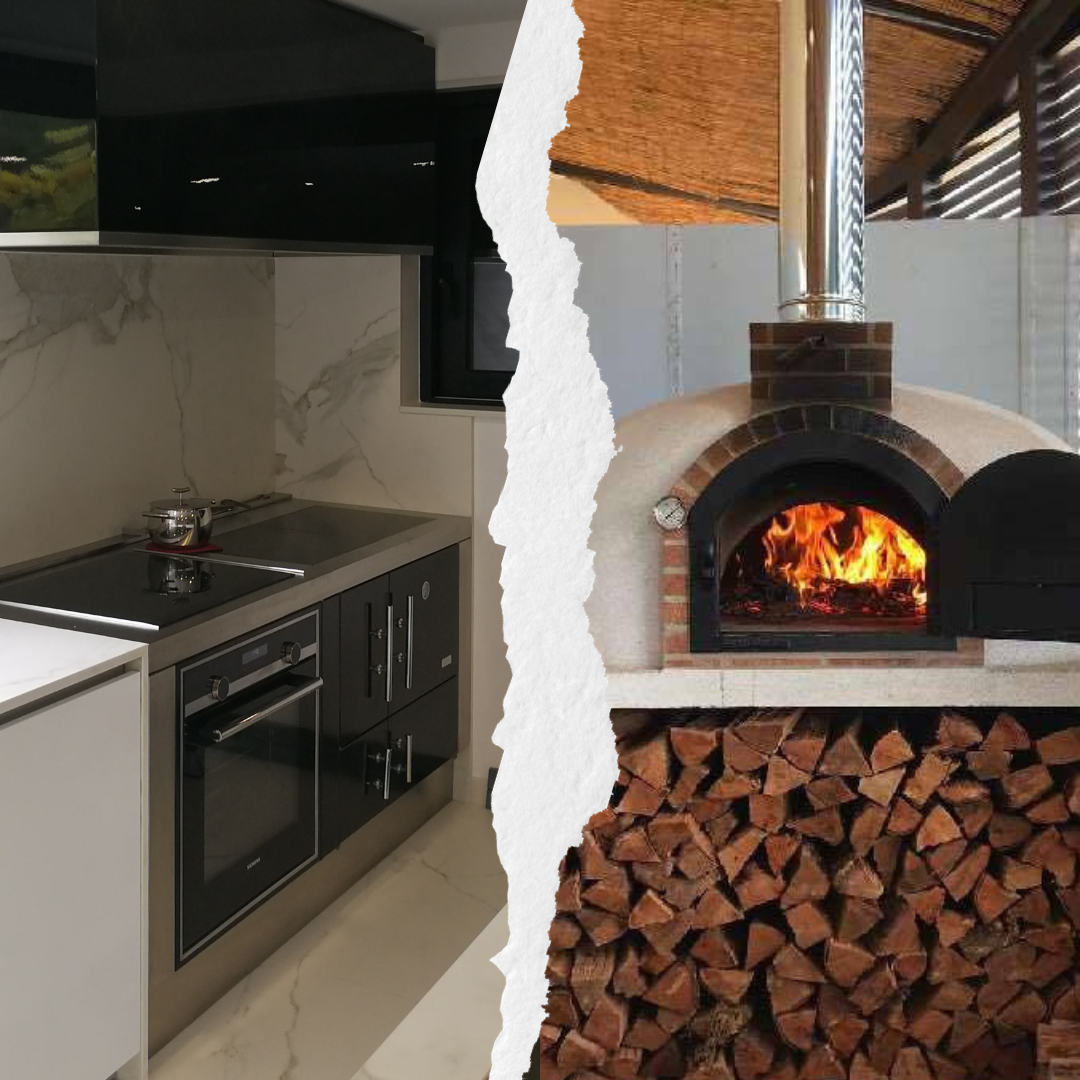
There is a lot of confusion between the terms wood-burning stove and wood-fired oven, especially when talking about modern cooking and heating equipment.
In reality, they are not the same: they are different elements within an advanced and multifunctional wood-fired cooking system.
In this guide, we explain the difference between a wood-burning stove and a wood-fired oven, how they work, and what they are used for.
What is a wood-burning stove?
A wood-burning stove is the main, complete unit of a modern wood-fired cooking system.
It is equipment that uses wood combustion as a source of thermal energy, allowing efficient cooking and heating.
Today, wood-burning stoves have evolved and are no longer just cooking appliances, becoming multifunctional systems.
Main functions of a modern wood-burning stove:
- Cooking with a top plate
- Use of an integrated wood-fired oven
- Domestic hot water heating
- Connection to central heating systems
- Efficient heat management for the home
What is a wood-fired oven?
A wood-fired oven is a compartment integrated into the wood-burning stove, designed exclusively for cooking food.
In other words, the oven is not the stove—it is a built-in feature within the main unit.
It works through wood combustion, which heats its internal structure to very high temperatures, ensuring even and intense cooking.
Wood-fired oven (market definition): In the market, a wood-fired oven is understood as an ancestral culinary appliance, usually built with refractory brick or clay in a dome shape (igloo-style), which uses wood burning to heat its internal structure, reaching very high temperatures (often above 400°C).
Uses of a wood-fired oven:
- Artisan pizza
- Traditional bread
- Meat and roasts
Difference between wood-burning stove and wood-fired oven
Wood-burning stove:
- Complete equipment
- Cooking and heating system
- Can include a wood-fired oven
- Multifunctional use
Wood-fired oven:
- Compartment integrated into the wood-burning stove
- Exclusive cooking function
- High temperatures (400°C+)
- Focus on baking and roasting
Conclusion
The wood-burning stove is the complete cooking and heating system, while the wood-fired oven is an integrated component dedicated exclusively to high-temperature cooking.
Understanding this difference is essential to choose the right equipment and avoid common market confusion.